- Featured Article Order:
1
Here's a good question. Can you think of anything more important than floors?
Well, maybe. However, proper flooring is an incredibly crucial component in any food plant. You abuse your floors. I know, this may appear a shock to all you kind people out there. Your floors take tremendous abuse on a daily basis. Food Plant Engineering is here to help your floors deal with this. Protecting your floor is very important!
You walk on them. You work on them. You drop things on them. You wash them. They're everywhere. Here's the deal: floor failure in your plant severely damages your productivity and increases your sanitation costs.
What flooring options are available? If your floor is consistently exposed to harsh conditions, you may want to consider adding toppings to your floor to improve the durability and cleaning ease of the floor. Basically, be nice to your floor and it will return your kindness. How can you prevent floor failure? First, let's talk about the options and then discuss the causes of floor failure.
Flooring Options
Flooring options can be confusing because the industry has many manufacturers of floor systems. Furthermore, each manufacturer has different names for their product offerings. What can you do to make this easier? Well, Food Plant Engineering is here to help. In order to simplify selection, we can break down the options into two categories: seamless and non-seamless. In this issue we are going to focus on the overwhelmingly popular choice: seamless floors.
Seamless floors are categorized by the polymers in the resin in the floor. The polymers typically used in the food industry include:
-
Epoxy
-
Vinyl ester
-
Urethane
-
Acrylic – methyl methacrylate (MMA)
Resinous flooring systems all start with a base resin, so you should definitely ask any flooring manufacturer about the base resin they are using. After the base resin, various components are added to the resin depending on the intended use of the floor (and budget considerations of course).
Additives
There are many types of additives for your flooring system that can increase the performance of your floor. Each type of additive is specific to your floor's function. We will mention a select few here to give you ideas on possible options for your floor.
-
Coarse Sand Grit
This additive is great with most flooring. It prevents slipping and skidding
-
Color Chips
These chips are an attractive addition to your floor. As a decorative additive, color chips have aesthetic appeal and can be used together to form patterns and separate process areas.
-
Crack Spanning Primers
This material spans cracks and protects the finish topping from transference of the crack. It is used for cracked floors when it isn't practical to remove and replace the existing slabs.
Installation
Now you have chosen your floor system. Don't throw the huge party yet because the job isn't finished. It's time to look at floor installation techniques:
-
Coating
This is a quicker type of installation. It is thin and resembles a painting technique.
-
Broadcast
This method results in a heavier floor. The flooring is poured and other materials are then broadcast in the floor including chips, sand, or other hard materials. These objects are placed on top of the poured resin before the hardening process.
-
Trowel
You've surely seen this method done before. The thick paste-like substance is laid and spread with a trowel.
Now you know the options for seamless floors. You also know about the finer details. However, you don't know what causes seemingly good floors to fail. We're here to prevent the...
Top Six Floor Failures!
If you know what failures your floor will be subject to, you know what type of floor you need. Drum roll, please:
-
1 – Excessive Moisture Content
The dreaded moisture begins to slowly seep through the floor. Sounds like a horror movie, doesn't it? If the moisture content of your floor slab is too high, it can be a horror for your facility. Excessive moisture severely limits the types of floor topping you can install. Furthermore, this moisture migrates from the ground under your slab and causes cracks, potholes, and other inconvenient openings.
-
2 – Insufficient Chemical Resistance
Chemicals can kill you. I got your attention, right? Good, because chemicals can also kill your floors. Make sure that your product selection has sufficient data for resistance to the chemicals to which it will be exposed. Some materials (like grease) are harmless at normal temperatures, yet prove to be decisively corrosive when heated.
-
3 – Poor Thermal Shock Resistance
Do you work inside an active volcano? Probably not, but there are some very hot materials out there. For example, daily maintenance of food processing plants involves cleaning with hot water or steam. Thermal shock resistant surfaces do exist, and we can help you find them!
-
4 – Inadequate Surface Preparation
Oh, no! Someone made a mistake! Thankfully, we're here to clean up that mess with the power of knowledge. Sounds cheesy, but it's true. If you don't prepare your floor properly, it may need to be completely replaced soon after the installation process. Mechanically abrading the floor with steel shot is a good idea. Don't just leave it there though; vacuum it up for further use (this saves you money of course)! Water blasting can also be used. If oils or fats have penetrated the surface, use a chemical degreaser.
-
5 – Poor Slip Resistance
Don't forget that "wet floor" sign! Or, with the right type of flooring, you can use that sign less often. You don't want employees to slip and crack their heads because that results in serious injury (and high insurance premiums)! The surface texture of floors in wet areas should be skid resistant and not subject to removal of the texture during exposure to daily wear and tear. Remember to request a sample of the product! This way, you can compare it to the finished texture of the floor.
-
6 – Unrealistic Expectations
Ah, this is something we are all guilty of. Do not expect a miracle floor that will last forever, win you an award, pay your debts, or make your spouse eternally happy with your anniversary gifts. Seriously though, the floor that looks the best may not prove to be the best long term performer. Make sure you know the following:
-
What maintenance steps are necessary to keep the floor in best possible shape?
-
Are there important product limitations?
-
What is the floor's service life?
-
What constitutes normal wear and tear?
-
Are the warrantee terms and conditions reasonable?
Well, there you have it. I hope you have learned a thing or two about flooring. You can't be expected to know everything, and that's why Food Plant Engineering is here. For over sixty years, we have dealt professionally with all types of food plant construction concerns. Flooring is one of them. We can aid you in determining the best type of flooring for your existing or future food plant.
- Featured Article Order:
1
A solid food safety system depends on many elements, such as HACCP plans and Sanitation Standard Operation procedures. However, these elements cannot stand on their own merit without a facility designed to facilitate the implementation of these plans. Facility planning and design is part of the foundation on which a good food safety system is built.
Facility design to incorporate food safety starts with the following key elements:
The first key element involves the layout and planning of a facility: A proper layout will minimize the potential for the creation and proliferation of food safety hazards.
The second key element involves the design of the materials and components in a food facility: A proper design will enhance the ability to maintain sanitary conditions.
The following is a list of the top facility design elements which must be controlled in order to achieve and maintain a sanitary facility:
-
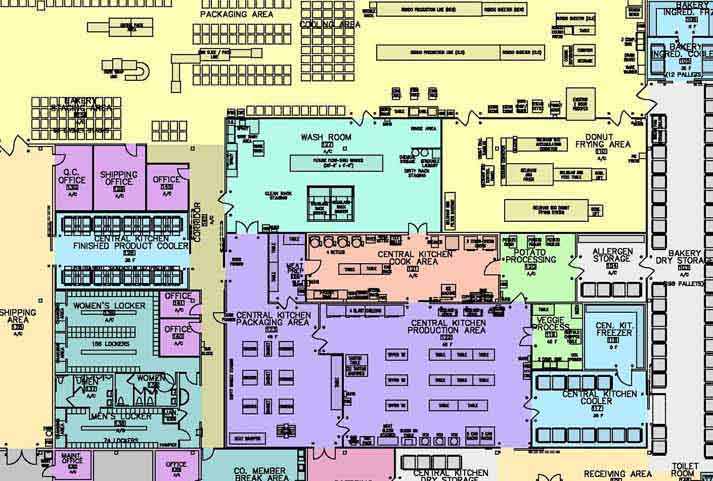
Hygienic Zones Control
Maintain physical separations that reduce the likelihood of the transfer of hazards from one area or process of the facility to another area or process.
-
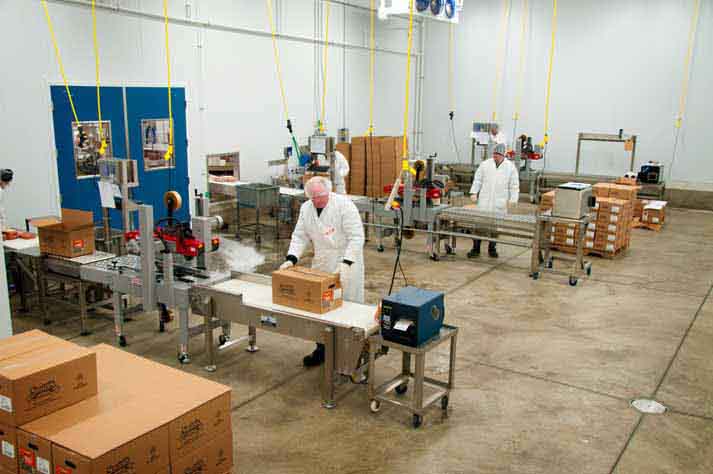
Flow Control
Establish traffic and process flow that control movement of production workers, managers, visitors, QA staff, sanitation and maintenance personnel, products, ingredients, rework, and packaging materials to reduce food safety risks.
-
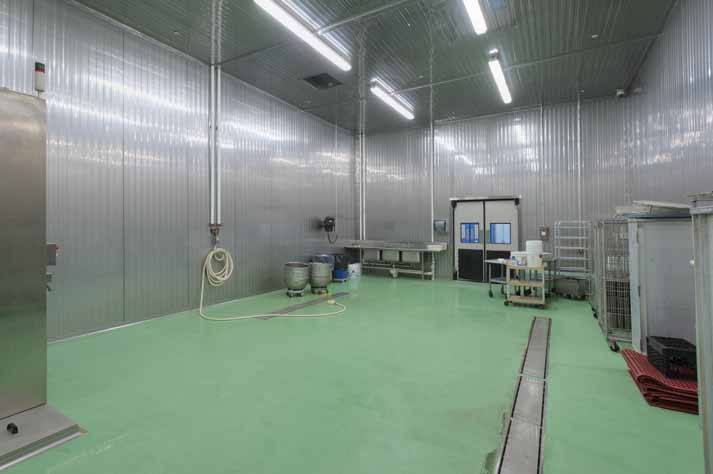
Water Control
Design and construct a building system (floors, walls, ceilings, and, supporting infrastructure) that prevents the development and accumulation of water. Ensure that all water positively drains from the process area and that these areas will dry during the allotted time frames.
-
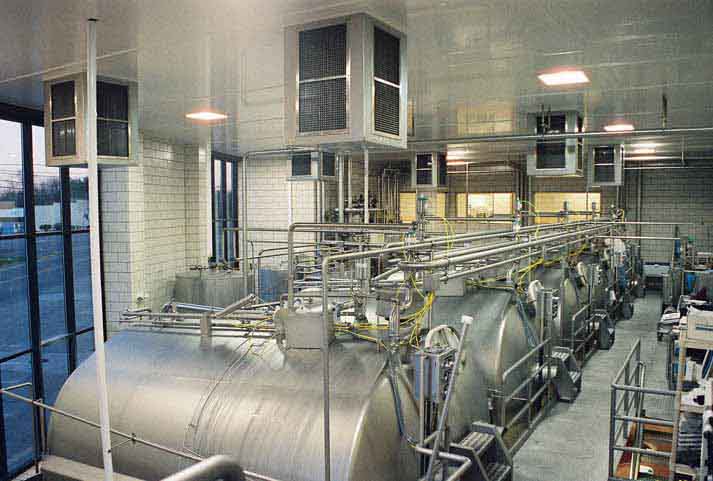
Environmental Control
Control room temperature and humidity to facilitate control of microbial growth. Keeping process areas cold and dry will reduce the likelihood of growth of potential food- borne pathogens. Ensure that the HVAC/ refrigeration systems serving process areas will maintain specified room temperatures and control room air dew point to prevent condensation.
-
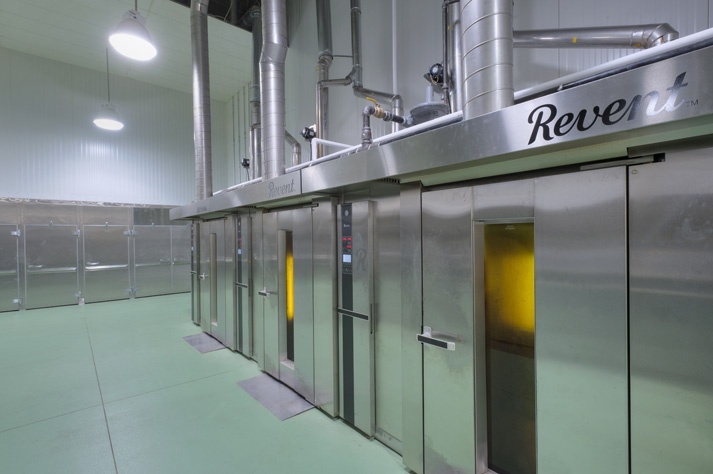
Air Flow Control
Design HVAC/ refrigeration systems for process areas to ensure air flow will be from more clean to less clean areas, filter air to control contaminants, provide outdoor makeup air to maintain specified airflow, minimize condensation on exposed surfaces, and capture high concentrations of heat, moisture and particulates at their source.
-
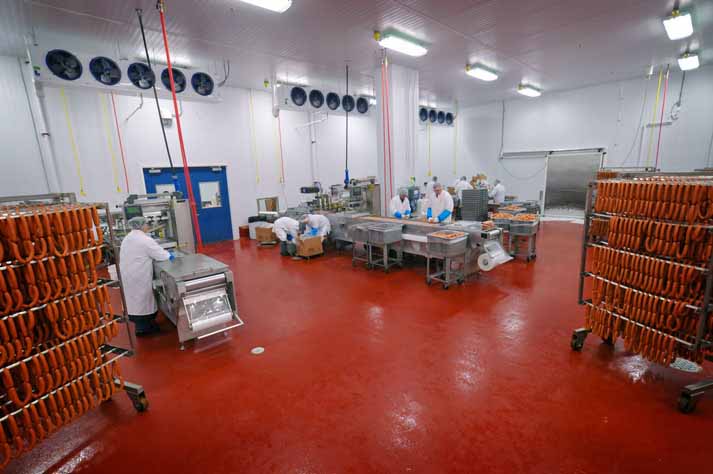
Spatial Control
Provide interior spatial design that enables cleaning, sanitation and maintenance of building components and processing equipment.
-
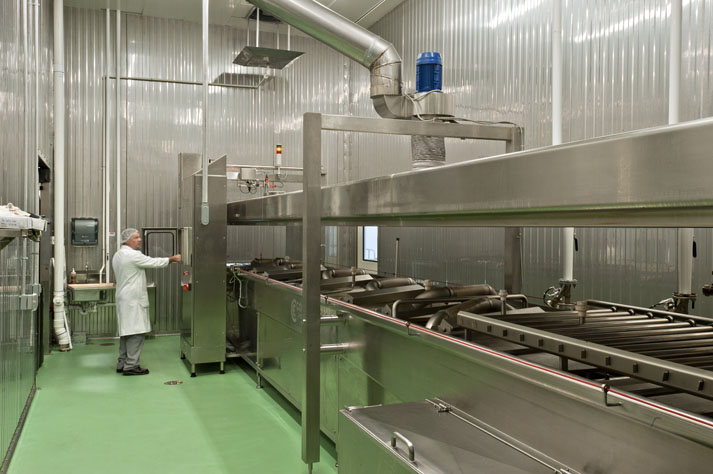
Sanitation Control
Provide proper sanitation systems to eliminate the chemical, physical and microbiological hazards existing in a food facility environment.
-
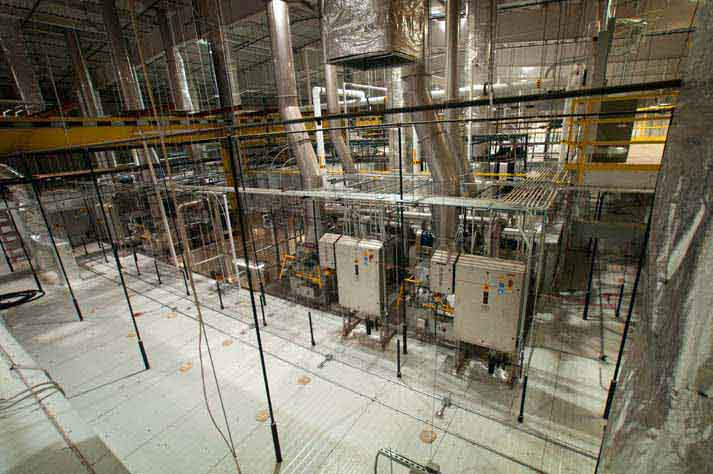
Building Components Control
Design building components to prevent harborage points, ensuring sealed joints and the absence of voids. Facilitate sanitation by using durable materials and isolating utilities with interstitial spaces (walkable ceilings) and stand offs.
-
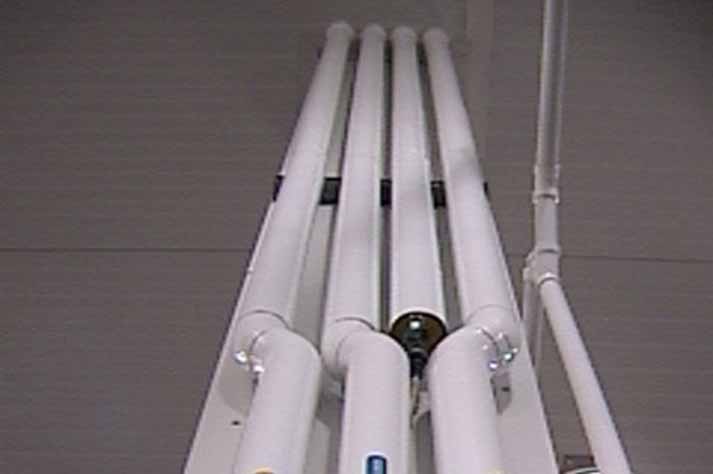
Utility System Control
Design and install utility systems to prevent the introduction of food safety hazards by providing surfaces that are cleanable to a microbiological level, using appropriate construction materials, providing access for cleaning, inspection and maintenance, preventing water collection points, and preventing niches and harborage points.
-
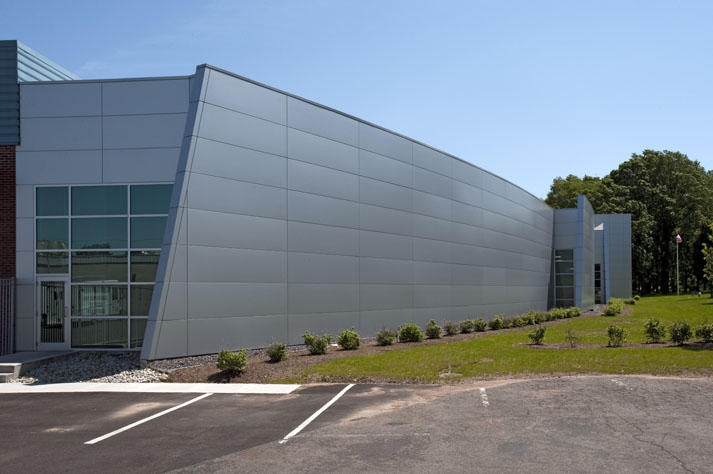
Site Elements Control
Provide site elements such as exterior grounds, lighting, grading, and water management systems to facilitate sanitary conditions for the site. Control access to and from the site.
-
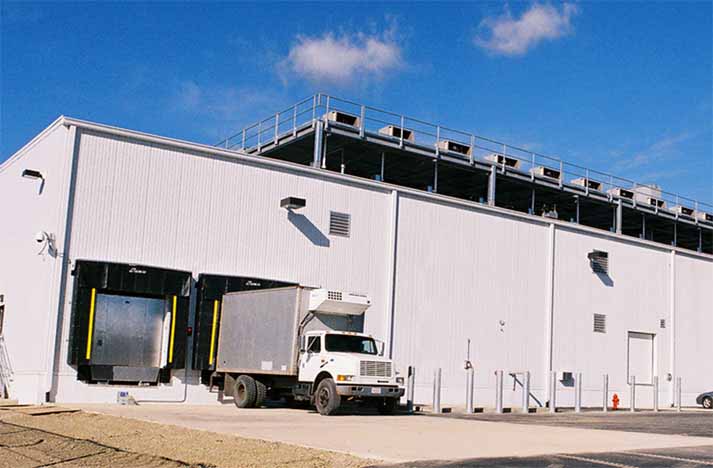
Building Envelope Control
Design and construct all openings in the building envelope (doors, louvers, fans, and utility penetrations) so that insects and rodents have no harborage around the building perimeter, easy route into the facility, or harborage inside the building. Design and construct envelope components to enable easy cleaning and inspection.